Let’s determine if you should wear gold or silver based on your appearance, style, budget, and comfort. Answer each question below and keep track of your responses by noting the letter for each choice. You’ll use your results to find your recommended metal.
| Questions and answers | |
 |
|
|
|
| Results | |
| If mostly answered A:
Your pick: Silver or White Gold
You gravitate toward cooler tones, which makes silver and white gold natural fits. These metals tend to complement cooler complexions and pair well with the colors you wear most often.
If you’re looking for pieces you can wear every day with little upkeep, white gold gives you a polished and premium finish that fits your style.
Silver is an easy choice when you want a flexible and accessible piece that still feels refined.
|
|
| If mostly answered B:
Your pick: Yellow Gold
You look your best in warm, rich tones. Yellow gold brings out the warmth in your undertone and blends naturally with the expressive colors in your wardrobe. It adds depth, glow, and a sense of ease to your everyday look. If you want a metal that feels timeless and inviting, yellow gold is your match.
|
|
| If mostly answered C:
Your pick: Rose Gold or Mixed Metals
You sit comfortably between warm and cool, which gives you a wide range of options. Rose gold offers a soft, balanced glow that works across many palettes, while mixed-metal styles let you play with texture and contrast. Your style feels flexible, so you can switch between tones without losing harmony. If you want one metal that works with everything, white gold is still a reliable pick.
|
|
| General/bonus result (applies as a bonus answer or standalone answer if your results are tied or the quiz doesn’t work properly):
Your pick: White Gold
Your answers point to a balance of warm and cool tones, which makes white gold an easy choice. It offers brightness, durability, and a clean finish that works with nearly any outfit or gemstone. If you like pieces you can wear every day without thinking twice, white gold fits that need. It gives you a polished look with long-term versatility.
|
If you’re still deciding about what color jewelry you should wear after taking the silver or gold jewelry quiz, let’s dig deeper. Choosing the right metal often comes down to undertones, how your wardrobe comes together, and what jewelry suits your hair color when it sits closest to your face.
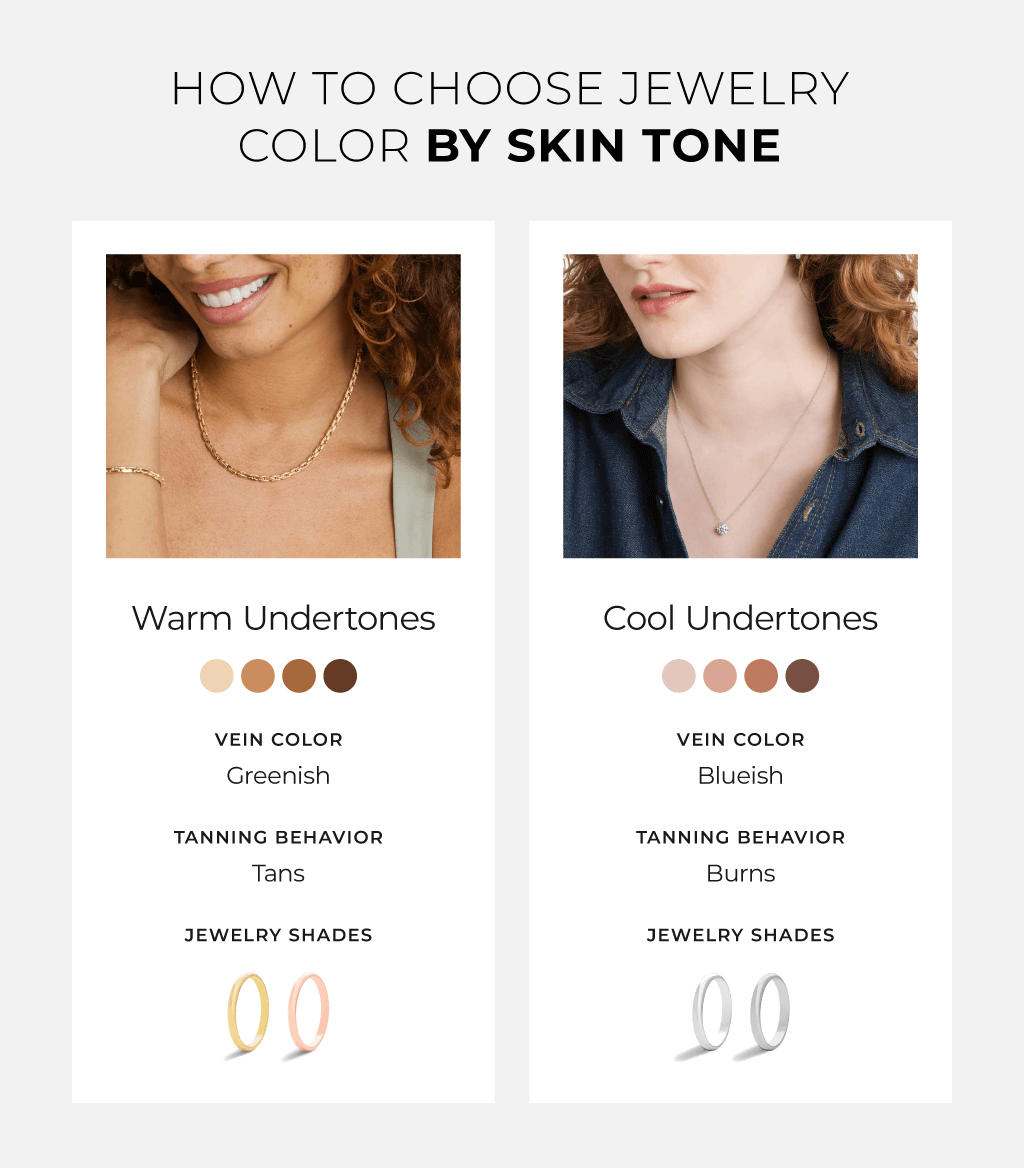
Some jewelry colors flatter your skin tone while others might create contrast that washes you out. To find the right one for you, take this quick gold or silver skin tone test:
You have warm undertones if the veins on your wrist are green, your skin tans easily, and you have brown or hazel eyes.
You have cool skin undertones if your veins are blue or purple, you burn easily in the sun, and your eyes are blue, gray, or green.
Some people fall somewhere in between with neutral undertones. You have neutral undertones if your veins appear both blue and green. You also sometimes tan and sometimes burn when out in the sun.
To know if you should wear silver or gold, your wardrobe often offers clear clues. The colors you wear most can guide you toward metals that feel cohesive rather than distracting.
Take a look at the dominant tones in your closet. A palette built around earthy shades like rust, mustard, olive, and brown tends to pair naturally with gold jewelry, which adds warmth without overpowering the look.
Cooler wardrobes built around blues, grays, greens, and purples often feel more balanced with silver jewelry. Silver finishes echo those cooler tones and keep outfits looking streamlined.
Closets anchored in neutrals such as white, cream, navy and black offer the most flexibility. In those cases, both gold and silver integrate easily, giving you freedom to switch metals based on mood or occasion to know if you should wear silver or gold without overthinking it.
Finally, factor in budget and quality. Investing in high-quality gold and silver is usually a good choice. Lower-quality gold, gold vermeil, or silver-plated pieces often contain copper, which can turn your skin green, or nickel, a common irritant for those with sensitive skin.
Instead of opting for low-quality pieces, compare your options for comfortable and long-lasting wear. Here’s a helpful place to start: