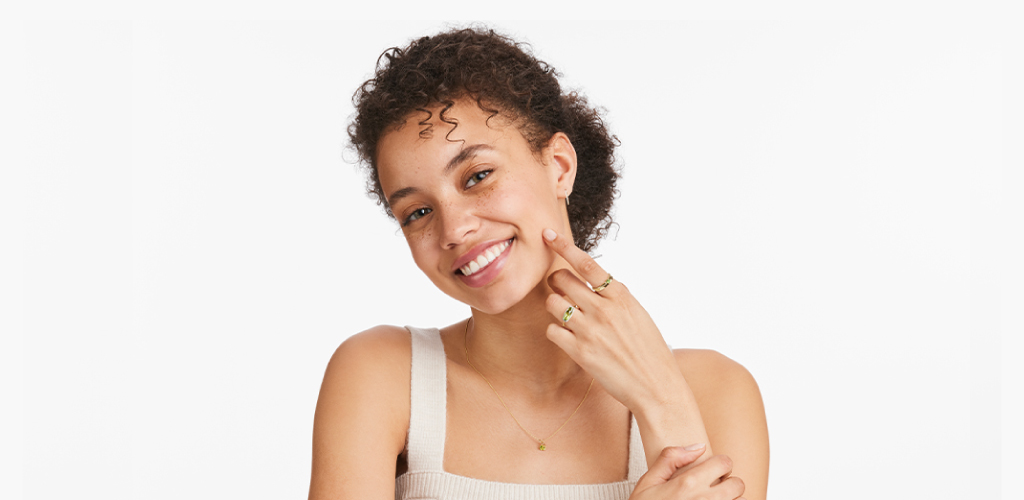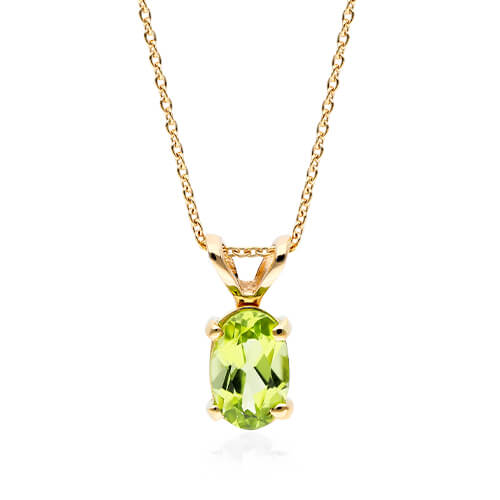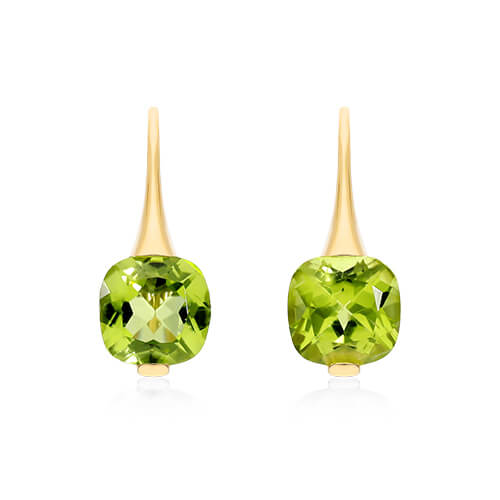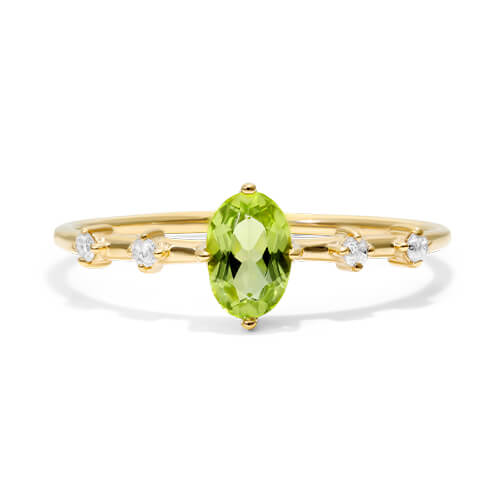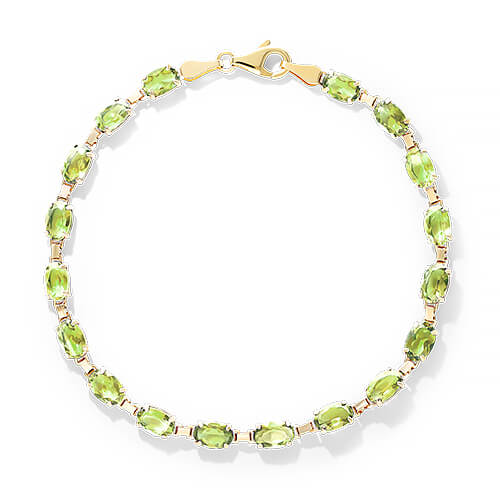
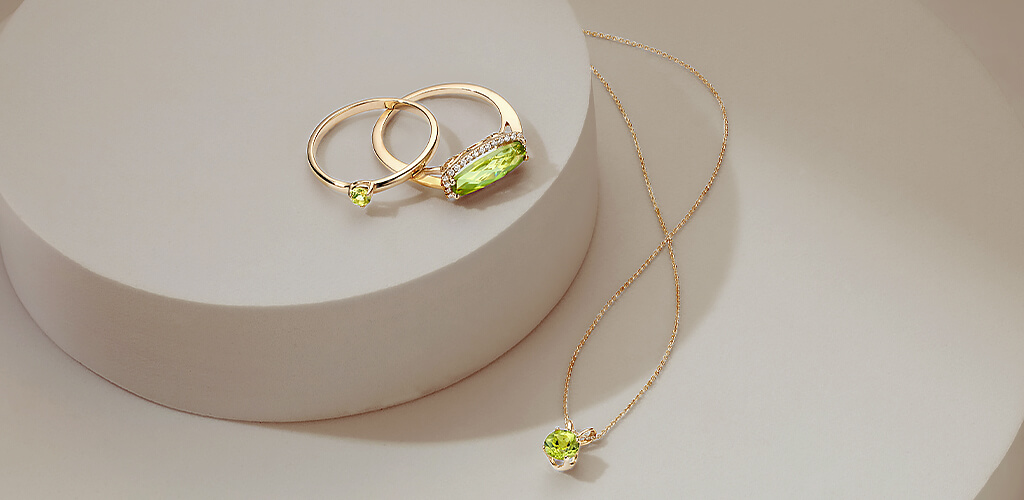
Peridot is the gem-quality form of olivine, a species of magnesium-rich silicate minerals prized for its yellowish green color. The word “peridot” is thought to be derived from the Arabic word faridat, which means gem.
Like diamonds, peridots form under extreme conditions within the Earth. These gemstones are most commonly formed in the Earth’s mantle (the mostly solid bulk of the Earth’s interior) and rise to the surface with volcanic activity. In very rare cases, peridots have also been found in meteorites.
First found by the ancient Egyptians in the Red Sea, peridot is now largely mined in China, Myanmar, Pakistan, and the U.S. (especially in Arizona). Peridot draws attention for its eye-catching color and long history.
Below, we’ll take a closer look at its color, meaning, and durability to get a fuller picture of this unique gem.
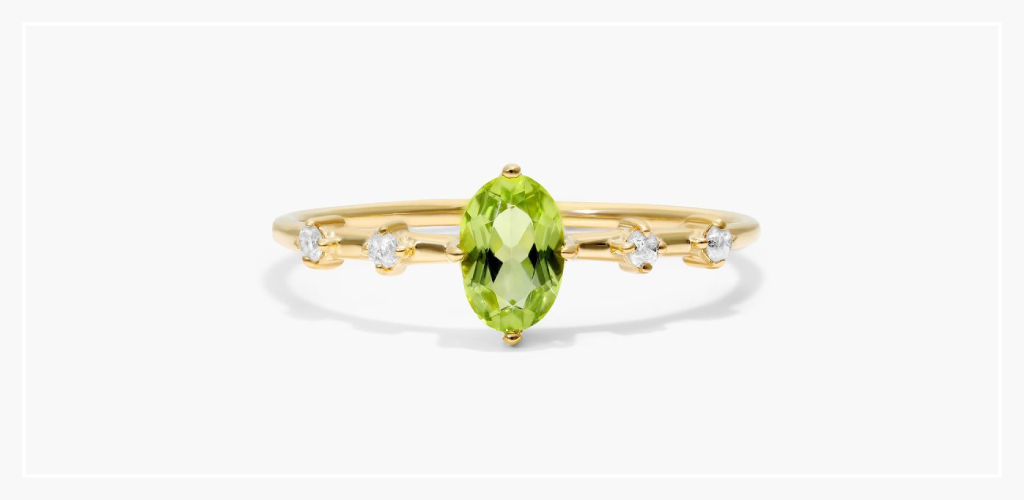
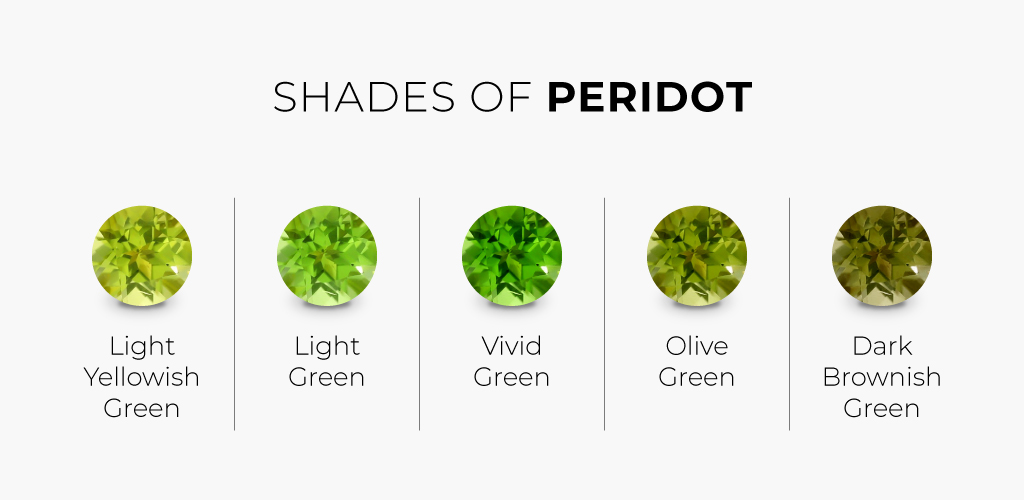
Peridot is the only gem that comes in a single color: green. While the hue of peridot is always green, the intensity and undertone can vary depending on the amount of iron present during the gem’s formation. Its shades range from lime to brownish olive.
Highly saturated, vivid, and pure green peridots are the most prized. The presence of brown hues may make a stone less valuable. Although some may mistake peridot for other green stones like emeralds or green tourmalines, peridot’s yellowish overtone and glassy luster help distinguish it from the crowd.
The ancient Egyptians thought peridot protected against nightmares and brought the wearer confidence, good luck, and health. During the Middle Ages, medieval Europeans used peridot in church adornments because they believed it brought harmony and spiritual clarity. Peridot’s luminous green was also sometimes associated with the sun.
Today, peridot continues to symbolize strength, well-being, and clarity. Peridots are popular gemstones for engagement rings and the traditional stone for 16th wedding anniversaries, symbolizing a lasting commitment to your love.
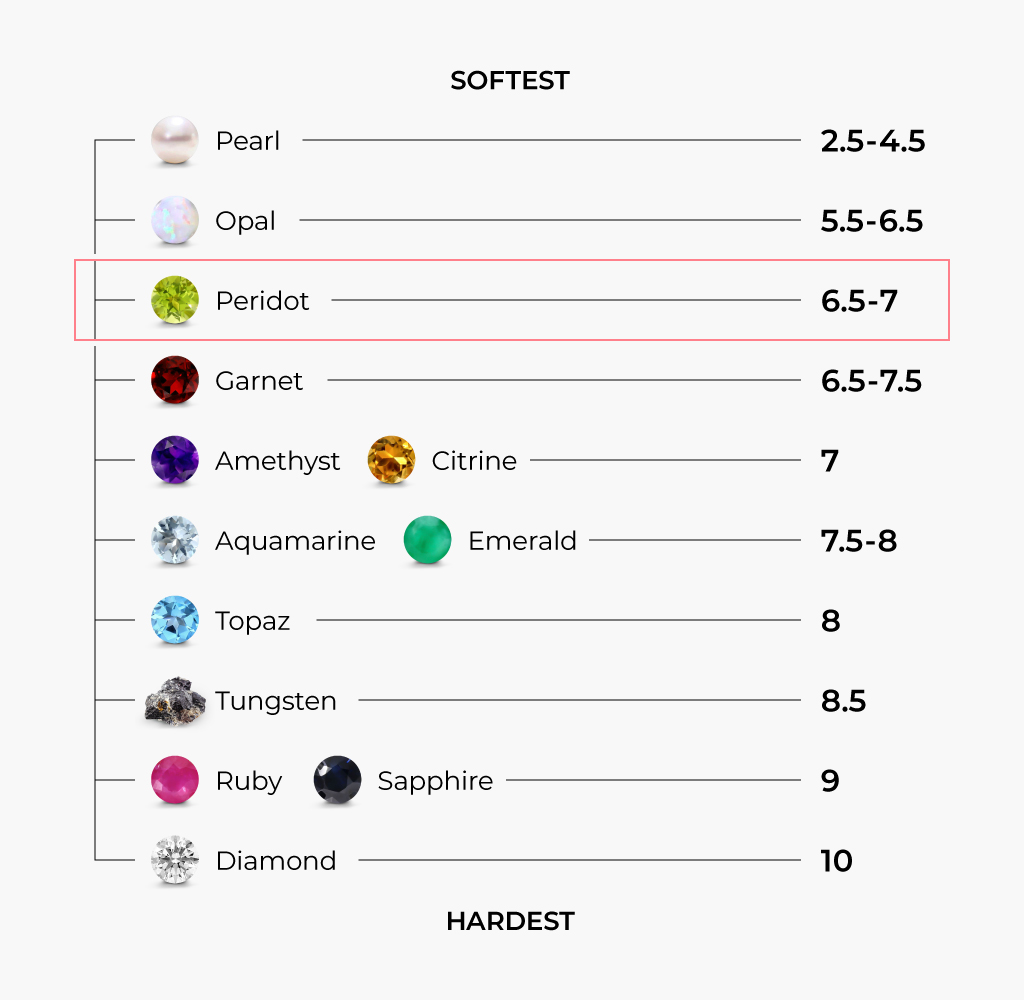
Peridot rates 6.5 to 7 on the Mohs Scale of Hardness. It’s not the strongest August gemstone, but it is durable enough for fine jewelry when properly set and cared for.
If you want a peridot engagement ring, pair it with protective features like a bezel or cathedral ring setting to shield the stone from impact. This, alongside mindful handling, will make a peridot piece safe for daily wear.
Take care of your peridot jewelry by cleaning the stone with mild soap and a soft brush. Avoid harsh steam and ultrasonic cleaners, which could damage the stone. Store peridot separately from harder gemstones like diamonds to avoid scratches and keep its surface shining.
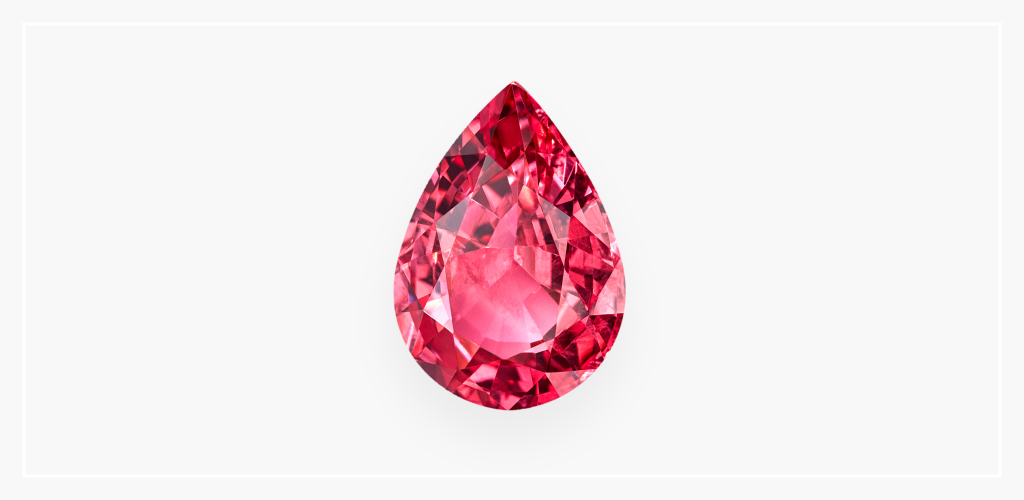
Spinel became an August birthstone in 2016, when it was added to introduce more color variation and durability to the lineup. Famously, spinel has been confused for other gemstones, like ruby, throughout history.
However, modern gemologists now find spinel worthy of its own appreciation.
Spinel is mined all over the world, but especially in Pakistan, Tanzania, Sri Lanka, Tajikistan, Vietnam, and Myanmar. This versatile gem is less well-known than other birthstones, but it stands out for its toughness and color variations. Here’s what sets spinel apart and makes it perfect for everyday jewelry.
Spinel forms in isometric crystals and occurs in a gorgeous range of colors. Pure spinel is colorless, but the presence of different trace elements causes the mineral to take on various hues as the crystal grows.
Depending on the amount and types of trace elements, spinel can form in shades of red, pink, purple, orange, green, black, and blue. Saturation ranges from soft and light to deep and vivid. The rarest and most valued shades of spinel are bright red and cobalt blue.
Spinel has historic ties to royalty and regalia, especially since it was once often mistaken for ruby and sapphire. Many famous “rubies” throughout history were later identified as spinels. For example, the 170-carat Black Prince’s Ruby, set in the Imperial State Crown in the UK, was discovered to actually be a spinel.
Today, thanks to its vibrant colors and durability, spinel is associated with vitality, energy, and balance. It is also the official gemstone gift for 22nd wedding anniversaries.
Spinel comes in at an 8 on the Mohs Scale of Hardness, meaning it has excellent toughness and resists chips and scratches better than many other colored gems. That makes spinel a great option for everyday pieces, like a birthstone engagement ring.
Though spinel is durable, you should still protect your spinel pieces from hard impacts and harsh chemicals. Clean with warm, soapy water and a soft brush. Dry fully before storing to prevent residue buildup. Avoid bleach, acids, and abrasive cleaners. Ultrasonic and steam cleaners can be safe for unfractured stones, but gentle cleaning is the safest approach.
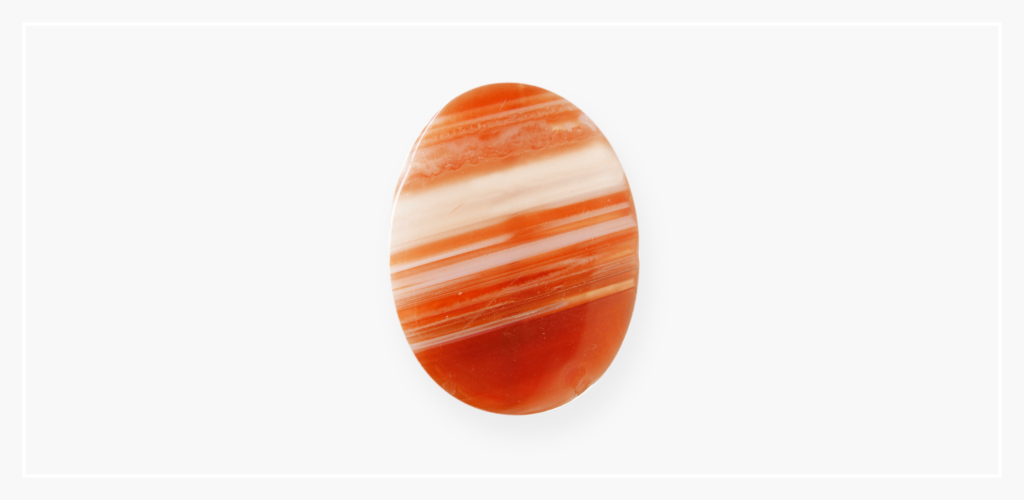
August’s third and final birthstone is sardonyx. Sardonyx is actually August’s most traditional birthstone, long associated with the month before peridot took over as the primary choice. Its name comes from the makeup of its two layers, “sard” and “onyx.”
With its stripes of light and dark colors, sardonyx’s layered look makes it stand out from the other August birthstones. It is found all over the world, including in India, Germany, Brazil, Madagascar, and the U.S. Its unique appearance and ready availability make sardonyx a fascinating and accessible alternative to peridot and spinel.
Let’s dive deeper into what makes it unique.
Sardonyx is a type of banded chalcedony, made up of the minerals sard and onyx. The sard layers appear in shades of reddish-brown, while the onyx layers appear white or black. Together, these contrasting bands create distinct patterns, making each sardonyx stone completely unique.
The clearly defined layers of sardonyx make it a popular stone for decorative carvings. Artisans have long used sardonyx to carve cameos and intaglio pendants, taking advantage of the different layers to create contrast and depth.
Sardonyx has a long history, especially in ancient Roman carvings. Since hot wax doesn’t stick to its smooth surface, sardonyx was often used for signet rings to seal documents. Roman soldiers also wore sardonyx rings for protection and bravery in battle.
Today, we still associate sardonyx with courage, communication, and stability. It’s linked to inner strength, confidence, and grounding.
Like peridot, sardonyx is a 6.5 to 7 on the Mohs Scale of Hardness. It has a medium level of durability, so you’ll need to wear it with care. Some sardonyx is dyed to enhance its color contrast, and dyed sardonyx can be damaged by prolonged exposure to high heat.
To clean sardonyx birthstone jewelry, stick to warm, soapy water and a soft brush. As with peridot, avoid harsh chemicals and ultrasonic cleaners, since these can damage the stone. When storing, keep sardonyx separate from harder gemstones to preserve its polished surface.